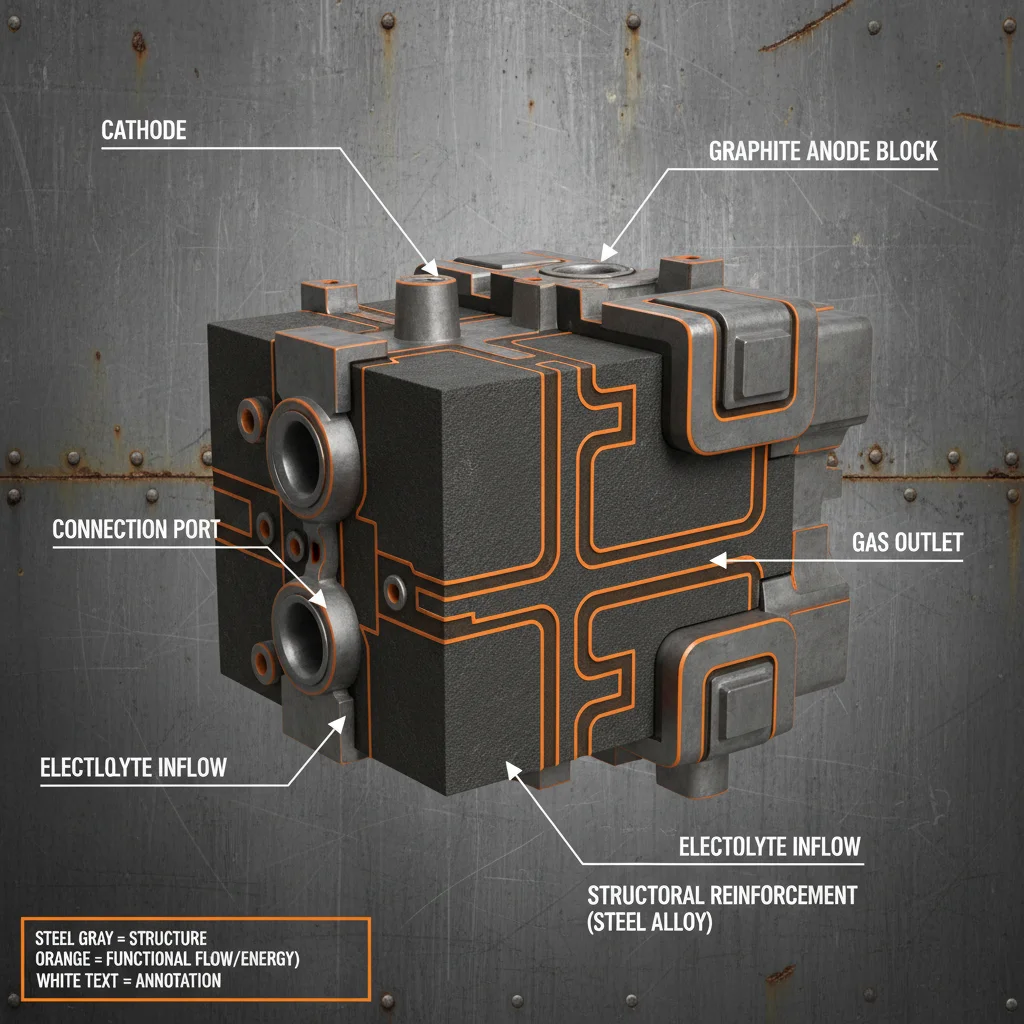
Dah Carbon A Leading Graphite Blocks Manufacturer for Industrial Solutions

Dah Carbon A Leading Graphite Blocks Manufacturer for Industrial Solutions

0%

Table of Contents

Graphite blocks are essential components in numerous industrial processes, ranging from metallurgy and semiconductor manufacturing to electric vehicle battery production. As a leading graphite blocks manufacturer, we understand the critical importance of consistently high-quality materials for our clients’ success. Demand for graphite blocks is steadily increasing globally, driven by the rapid growth of these key industries and the ongoing search for more efficient and sustainable material solutions.

The global graphite market is experiencing significant expansion, with Asia-Pacific leading in both consumption and production. According to recent reports from the United Nations, the demand for graphite is projected to grow at a compound annual growth rate (CAGR) of approximately 5% over the next decade. This growth is largely fueled by the escalating demand for lithium-ion batteries, in which graphite serves as a crucial anode material. This underscores the need for reliable and scalable production from a specialized graphite blocks manufacturer.

Understanding the nuances of graphite block production – from raw material sourcing and purification to precision machining and quality control – is paramount for businesses operating in these dynamic sectors. Effective sourcing and innovative manufacturing processes are not only crucial for meeting market demands but also for mitigating potential supply chain disruptions and ensuring long-term sustainability.

graphite blocks manufacturer

The Significance of Graphite Blocks in Modern Industry

graphite blocks manufacturer

Graphite blocks are not merely a material; they are a foundational element supporting diverse advanced technologies. From the crucibles used in metal casting to the molds employed in glass manufacturing, their thermal stability, chemical inertness, and electrical conductivity make them indispensable. A proficient graphite blocks manufacturer understands these nuanced requirements.

The demand extends beyond traditional applications into emerging fields. The rapid expansion of the electric vehicle (EV) market, coupled with the increasing reliance on renewable energy storage solutions, has dramatically increased the demand for high-purity graphite—a critical component in lithium-ion battery anodes. Consequently, the role of a specialized graphite blocks manufacturer is becoming increasingly vital.

Defining Graphite Blocks Manufacturing

Graphite block manufacturing is a complex process that involves several stages, beginning with the sourcing of high-quality graphite ore. This ore undergoes purification, shaping, and machining to produce blocks with precise dimensions and properties. Different manufacturing methods—isostatic pressing, extrusion, and vibration molding—yield varying characteristics suited to specific applications.

Quality control is paramount throughout the entire manufacturing process. A reputable graphite blocks manufacturer employs rigorous testing procedures, including density measurements, strength testing, and impurity analysis, to ensure that each block meets stringent industry standards and client specifications. Consistency is key, and this relies on a robust quality management system.

The selection of appropriate binders and additives also plays a crucial role in determining the final properties of the graphite block. These materials influence factors such as thermal shock resistance, oxidation resistance, and mechanical strength, thereby tailoring the block’s performance to its intended application.

Core Characteristics of High-Quality Graphite Blocks

Several key characteristics define high-quality graphite blocks. Firstly, high density contributes to enhanced thermal conductivity and mechanical strength. Secondly, low porosity minimizes gas permeability and reduces the risk of oxidation at elevated temperatures. A reliable graphite blocks manufacturer consistently delivers on these fronts.

Furthermore, the purity of the graphite material is critical, particularly for applications requiring high electrical conductivity or chemical inertness. Impurities can significantly degrade performance and limit the block’s operational lifespan. A skilled graphite blocks manufacturer prioritizes sourcing and purification processes to ensure exceptional purity levels.

Finally, dimensional accuracy and surface finish are crucial for ensuring proper fit and functionality in demanding applications. Precision machining and careful quality control are essential for achieving these characteristics. This is why selecting an experienced graphite blocks manufacturer is paramount.

Key Performance Indicators for Graphite Blocks

Evaluating the performance of graphite blocks requires careful consideration of several key indicators. Thermal conductivity, measured in Watts per meter-Kelvin (W/m·K), determines the block’s ability to dissipate heat—a crucial factor in high-temperature applications.

Mechanical strength, assessed through compressive and flexural strength tests, indicates the block’s resistance to deformation and fracture under load. Porosity, expressed as a percentage, influences the block’s gas permeability and resistance to oxidation.

Graphite Blocks Manufacturing Performance Indicators

Global Applications of Graphite Blocks

Graphite blocks find widespread application across various industries globally. In the metallurgical sector, they serve as crucibles for melting and casting metals, benefiting from their exceptional thermal shock resistance and chemical inertness. These are vital components for foundries throughout Europe and Asia.

The semiconductor industry relies on graphite blocks for crystal growing and silicon wafer production. The consistent quality and purity offered by a dedicated graphite blocks manufacturer are crucial for ensuring the integrity of these sensitive processes.

Advantages of Partnering with a Dedicated Manufacturer

Collaborating with a specialized graphite blocks manufacturer offers significant advantages. These manufacturers possess deep expertise in graphite materials, manufacturing processes, and quality control, ensuring consistently high-performance products tailored to specific requirements.

Dedicated manufacturers also offer greater flexibility in terms of customization, lead times, and supply chain management, allowing businesses to optimize their operations and respond quickly to changing market demands.

Furthermore, these partnerships often provide access to technical support and collaborative design capabilities, fostering innovation and driving continuous improvement in product performance and efficiency.

Future Trends in Graphite Block Technology

The future of graphite block technology is poised for innovation, driven by advancements in materials science and manufacturing techniques. Research is focused on developing graphite composites with enhanced mechanical strength, thermal conductivity, and oxidation resistance.

Additive manufacturing (3D printing) is also emerging as a promising technique for creating complex graphite block geometries with greater precision and efficiency. This opens up possibilities for customized designs and optimized performance in specialized applications.

Sustainable sourcing and recycling of graphite materials are gaining increasing importance, aligning with the global push for environmental responsibility. A forward-thinking graphite blocks manufacturer will prioritize these eco-friendly practices.

Overview of Graphite Block Manufacturing Challenges and Potential Solutions

Challenge Impact on Graphite Blocks Potential Solution Implementation Cost (1-10)
Raw Material Sourcing Fluctuations in price and supply Diversified supplier network & long-term contracts 6
Purity Control Reduced performance & lifespan Advanced purification techniques 8
Dimensional Accuracy Fit issues & increased waste Precision machining & automated inspection 7
Thermal Shock Resistance Cracking and failure in high-temperature apps Optimized material composition & heat treatment 5
Oxidation Resistance Degradation and material loss Protective coatings & specialized graphite grades 4
Cost Management Reduced profitability & competitiveness Lean manufacturing & process optimization 3

FAQS

What are the key factors to consider when selecting a graphite block manufacturer?

When choosing a graphite blocks manufacturer, prioritize factors such as material purity, manufacturing expertise, quality control processes, customization capabilities, lead times, and overall cost-effectiveness. Experience in serving your specific industry is also crucial. A reputable manufacturer will provide detailed material certifications and offer technical support to ensure optimal performance. Consider their capacity to scale with your evolving needs and their commitment to sustainable practices.

What types of graphite are commonly used in block manufacturing?

Various graphite types are utilized, including natural graphite, synthetic graphite, and impregnated graphite. Natural graphite offers cost-effectiveness, while synthetic graphite boasts higher purity and uniformity. Impregnated graphite combines the benefits of both, enhancing strength and resistance to oxidation. The ideal choice depends on the specific application requirements and performance expectations. A knowledgeable graphite blocks manufacturer can guide you toward the best material.

How does porosity affect the performance of graphite blocks?

Porosity significantly impacts the performance of graphite blocks. Higher porosity generally reduces density, strength, and thermal conductivity, while increasing gas permeability and susceptibility to oxidation. Low-porosity blocks are preferred for applications requiring high performance and durability. Manufacturers employ various techniques, such as isostatic pressing, to minimize porosity and enhance material properties.

What is the typical lead time for custom graphite block orders?

Lead times for custom graphite block orders vary depending on the complexity of the design, the quantity required, and the manufacturer’s current production schedule. Generally, lead times can range from 4 to 12 weeks. Communicating your specific requirements and deadlines early in the process can help expedite the order. Established graphite blocks manufacturer often offer expedited services for urgent projects.

How are graphite blocks tested for quality assurance?

Quality assurance testing typically includes density measurements, strength testing (compressive and flexural), porosity analysis, impurity analysis, and dimensional inspection. Some manufacturers also conduct thermal conductivity tests and oxidation resistance assessments. Detailed material certifications are provided to verify compliance with industry standards and client specifications.

What is the expected lifespan of a graphite block in a typical application?

The lifespan of a graphite block depends heavily on the specific application, operating conditions (temperature, pressure, atmosphere), and the quality of the material. In some applications, blocks can last for several years, while in others, they may require replacement more frequently. Regular inspection and maintenance can help maximize lifespan. A trusted graphite blocks manufacturer can provide guidance on optimal usage and maintenance practices.

Conclusion

In conclusion, graphite blocks are indispensable materials powering a wide range of industries, from metallurgy and semiconductors to the burgeoning electric vehicle market. Selecting a reputable graphite blocks manufacturer with expertise in material science, manufacturing processes, and quality control is critical for ensuring optimal performance, reliability, and longevity. The future of graphite block technology promises continued innovation, driven by advancements in materials and manufacturing techniques.

As the demand for sustainable and high-performance materials continues to grow, investing in partnerships with dedicated manufacturers committed to quality, innovation, and environmental responsibility will be key to unlocking the full potential of graphite block technology. Visit our website at www.dahcarbon.com to explore our comprehensive range of graphite block solutions and discuss your specific requirements.
William Thompson

William Thompson

William Thompson is a Quality Control Supervisor at Ding An Heng New Material Technology. He oversees the company’s rigorous inspection system, guaranteeing adherence to stringent quality control standards throughout the production process of UHP/HP/RP electrodes and other graphite products. With a background in chemical analysis and a keen eye for detail, William ensures that every batch meets the highest specifications. He’s instrumental in maintaining the consistency and reliability that define Ding An Heng's reputation.
Previous Reliable Graphite Block Supplier for Industrial and EV Applications
Next Exploring the Versatility and Growing Demand for Oem Graphite Block

If you are interested in our products, you can choose to leave your information here, and we will be in touch with you shortly.

  • captcha