Honestly, these graphite tube suppliers…you wouldn’t believe the things I’ve seen. Everyone’s chasing higher purity, tighter tolerances, lower thermal expansion. It’s all about getting that extra bit of performance out of whatever furnace they’re sticking them into. Used to be, ‘good enough’ was good enough. Now? Forget about it. They want aerospace grade for melting silicon. Makes my head spin sometimes.
Have you noticed how everyone’s fixated on silicon carbide lately? It’s everywhere – crucibles, heating elements, even some of the tubes. Seems like everyone's trying to move away from pure graphite, thinking it’s old tech. But then you go to a factory, and the guys are still wrestling with the same issues – cracking, oxidation, contamination… You just can’t escape the basics.
And the price…don't even get me started. It’s gone through the roof, especially with everything going on globally. It really makes you think about optimizing what you already have.

The Rising Demand for High-Performance Graphite Tube Suppliers
I encountered this at a crystal growth facility in Korea last time. They were using these imported tubes, super high density, claiming it eliminated all porosity. Sounded great on paper. But the guys on the floor were complaining about how brittle they were – any slight impact and they’d chip. You gotta balance density with toughness, you know? Strangely, they hadn’t factored in the handling during installation.
It's a tough world out there. We’re seeing demand skyrocket, especially from the EV battery sector. They need consistent quality, reliable supply chains…and they need it now. That's where finding good graphite tube suppliers comes in, the ones who understand the entire process, not just selling a product.
Defining Graphite Tube Suppliers & Their Industrial Significance
Okay, so a graphite tube supplier, at its core, is someone who makes tubes out of graphite. But it's way more than that these days. It’s about expertise in graphite grades, machining, purification, and understanding the end application. It’s about knowing that a tube for vertical Bridgman crystal growth isn't the same as one for a sputtering target.
They’re critical to a ton of industries – semiconductors, solar, LEDs, metallurgy…anything that involves high temperatures or corrosive environments. If your tubes fail, your whole process grinds to a halt. And the cost of downtime…well, let's just say it’s astronomical.
They’re not just suppliers; they're problem solvers. You call them up, explain your weird furnace setup, and they figure out a tube that’ll actually work. That's the good ones, anyway.
Key Factors Influencing Graphite Tube Supplier Selection
To be honest, everyone focuses on price. But that’s a fast track to disaster. You get what you pay for, especially with graphite. It’s the subtleties that matter: grain size, density, porosity, ash content, thermal conductivity…
Another big one is customization. Standard sizes are fine, but often you need something specific – a different length, a tapered end, a precise inner diameter. A good supplier will work with you to get exactly what you need. They’ll ask the right questions, maybe even visit your site. That tells you they care.
And don't underestimate lead times. These things aren’t made overnight. Especially the complex stuff. You need a supplier who can deliver when you need them, not when they feel like it. Anyway, I think responsiveness is key. If they don't pick up the phone, find someone else.
Material Composition & Manufacturing Precision
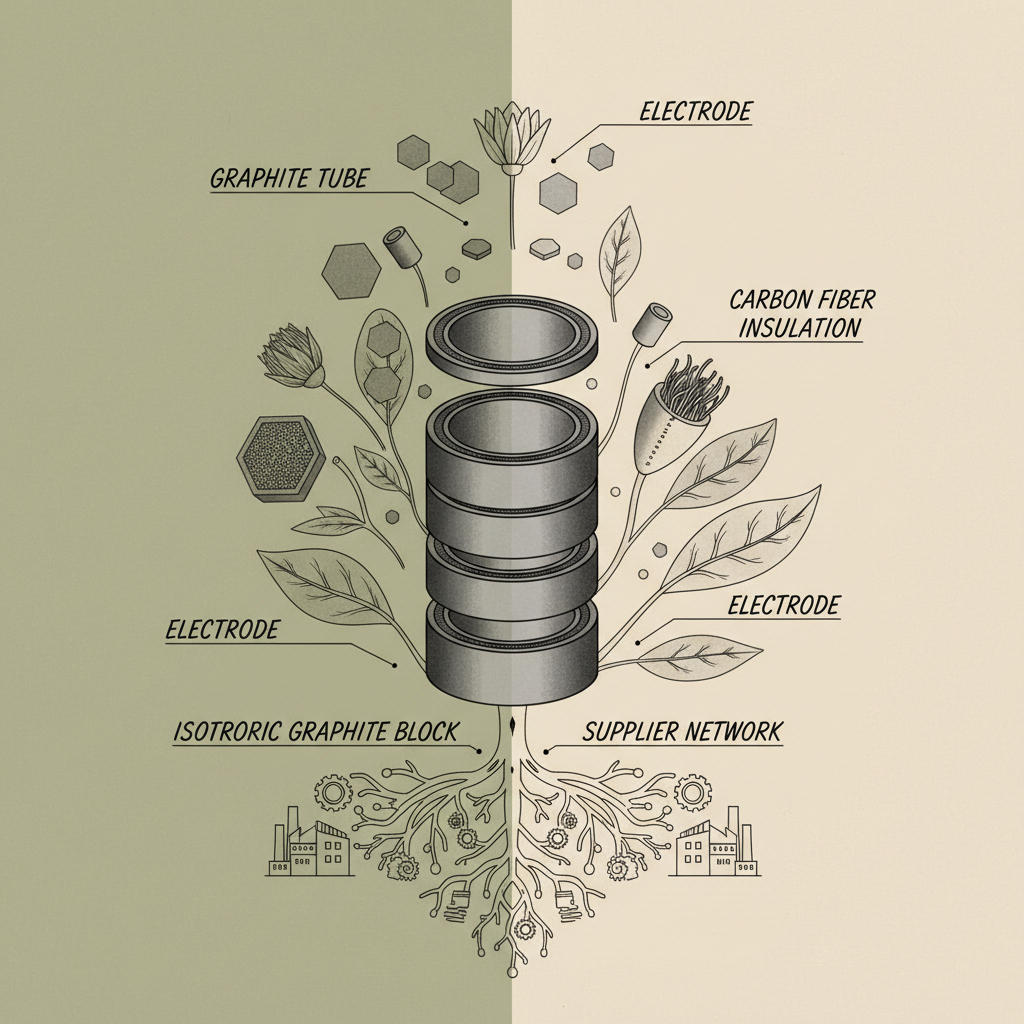
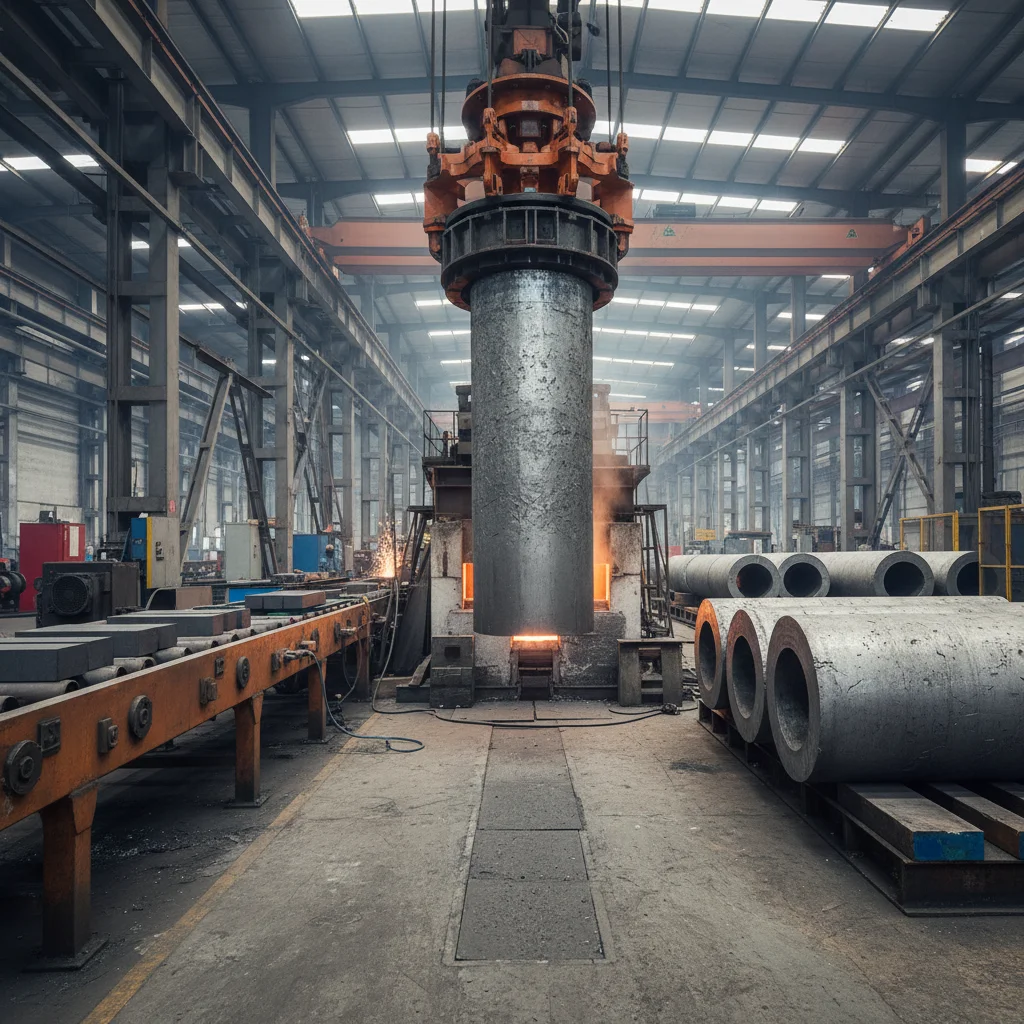
The graphite itself… it’s not all the same. There's isostatic graphite, molded graphite, extruded graphite… each with its own properties. Isostatic is generally the highest quality – most uniform, lowest porosity. But it’s also the most expensive.
I remember handling some extruded graphite once. It felt… gritty. Smelled a little off too. Turns out, they hadn’t fully purified it. Contamination can ruin an entire batch of wafers. Manufacturing precision is also huge. Even a tiny imperfection can cause stress concentrations and lead to cracking. You need tight tolerances, smooth surfaces, and consistent dimensions.
Graphite Tube Supplier Performance Comparison
Global Applications Across Diverse Industries
You’re seeing them everywhere. Semiconductor manufacturers in Taiwan, solar cell fabs in China, crystal growers in Japan... everyone needs these things. They're used for susceptors, crucibles, furnace linings, even as components in vacuum furnaces.
Last month, that small boss in Shenzhen who makes smart home devices insisted on changing the interface to on their crucible heating elements, and the result was complete chaos. They thought it would be a selling point, "future-proof" and all that. But it introduced a whole new set of thermal issues, and their production yield plummeted. They ended up going back to the old design. Sometimes, simpler is better.
Benefits and Long-Term Value Proposition
Look, these aren't cheap. But a good graphite tube will last. If you buy quality and treat it right, you can get years of service out of it. That reduces downtime, lowers maintenance costs, and ultimately increases your bottom line. It's an investment, not an expense.
There's also the environmental aspect. Graphite is a relatively sustainable material. It’s not like you’re digging up rare earth minerals. And a well-maintained tube means less waste. That matters to a lot of companies these days.
Quality Control, Testing & Performance Metrics
Testing…that's where things get interesting. You can do all sorts of lab tests – density, porosity, flexural strength. But the real test is how it performs in the furnace. We've had situations where a tube passed all the lab tests but cracked after just a few runs.
We started doing stress tests, simulating the thermal cycles the tubes would experience in the actual application. That’s when we started catching the problems. We also look at oxidation resistance – how quickly does the surface degrade at high temperatures? And contamination levels – are there any impurities leaching out into the process?
It’s a lot of trial and error. But you learn what works and what doesn’t. And you build relationships with suppliers who understand your needs.
Key Quality Control Metrics for Graphite Tube Suppliers
| Metric |
Testing Method |
Acceptable Range |
Importance Level (1-5) |
| Density |
Archimedes’ Principle |
1.7 - 1.9 g/cm³ |
5 |
| Flexural Strength |
Three-Point Bending Test |
> 40 MPa |
4 |
| Porosity |
Mercury Intrusion Porosimetry |
< 5% |
5 |
| Ash Content |
Combustion Analysis |
< 0.5% |
3 |
| Thermal Expansion |
Dilatometry |
< 1 x 10⁻⁶ /°C |
4 |
| Oxidation Resistance |
High-Temperature Burn-Off Test |
< 5 mg/cm² |
3 |
FAQS
Lead times can vary quite a bit depending on the complexity of the order and the supplier's current workload. Generally, you're looking at anywhere from 4 to 12 weeks for a custom tube. It really depends on the size, the precision required, and if they need to source any special materials. It's always best to get a quote and a firm delivery date upfront.
Cracking is a common issue, especially with rapid temperature changes. The key is to ensure the tube is properly supported and not subjected to excessive thermal shock. Preheating slowly and avoiding quenching are crucial. Also, choosing a graphite grade with a higher thermal shock resistance helps. And sometimes, it just comes down to good old-fashioned design – making sure the tube isn't overly stressed.
Isostatic graphite is created using high pressure, resulting in a very uniform density and minimal porosity. Molded graphite, on the other hand, is formed by pressing graphite powder into a mold. It’s generally less expensive, but it can have variations in density and strength. For critical applications, isostatic is usually the way to go, but molded can be perfectly adequate for less demanding uses.
Graphite is generally pretty resistant to most acids and alkalis, but it can be attacked by oxidizing agents at high temperatures. You need to consider the specific chemicals involved and the operating temperature. Some suppliers offer coatings to enhance corrosion resistance, but those add to the cost. It's about finding the right balance for your application.
Yes, graphite can be recycled, but it's not as straightforward as recycling aluminum or plastic. The process typically involves crushing the graphite and repurposing it for other applications. It's becoming more common as sustainability concerns grow, but it's not yet widely implemented. It really depends on the purity of the recycled material.
Look for a supplier with a solid reputation, a good track record, and a commitment to quality. Check their certifications, ask for references, and visit their facility if possible. A good supplier will be transparent about their processes and willing to work with you to find the best solution for your needs. And, honestly, if they don’t answer the phone, move on.
Conclusion
Ultimately, graphite tube suppliers are a linchpin in a lot of advanced manufacturing processes. Choosing the right supplier, understanding the material properties, and paying attention to detail are all critical for success. It’s a complex field, but when done right, it can deliver real value and contribute to significant innovation.
And look, at the end of the day, whether this thing works or not, the worker will know the moment he tightens the screw. He'll feel if it's right, if it's solid. That's the real test, isn't it? You can run all the lab tests you want, but that gut feeling… that’s what counts.