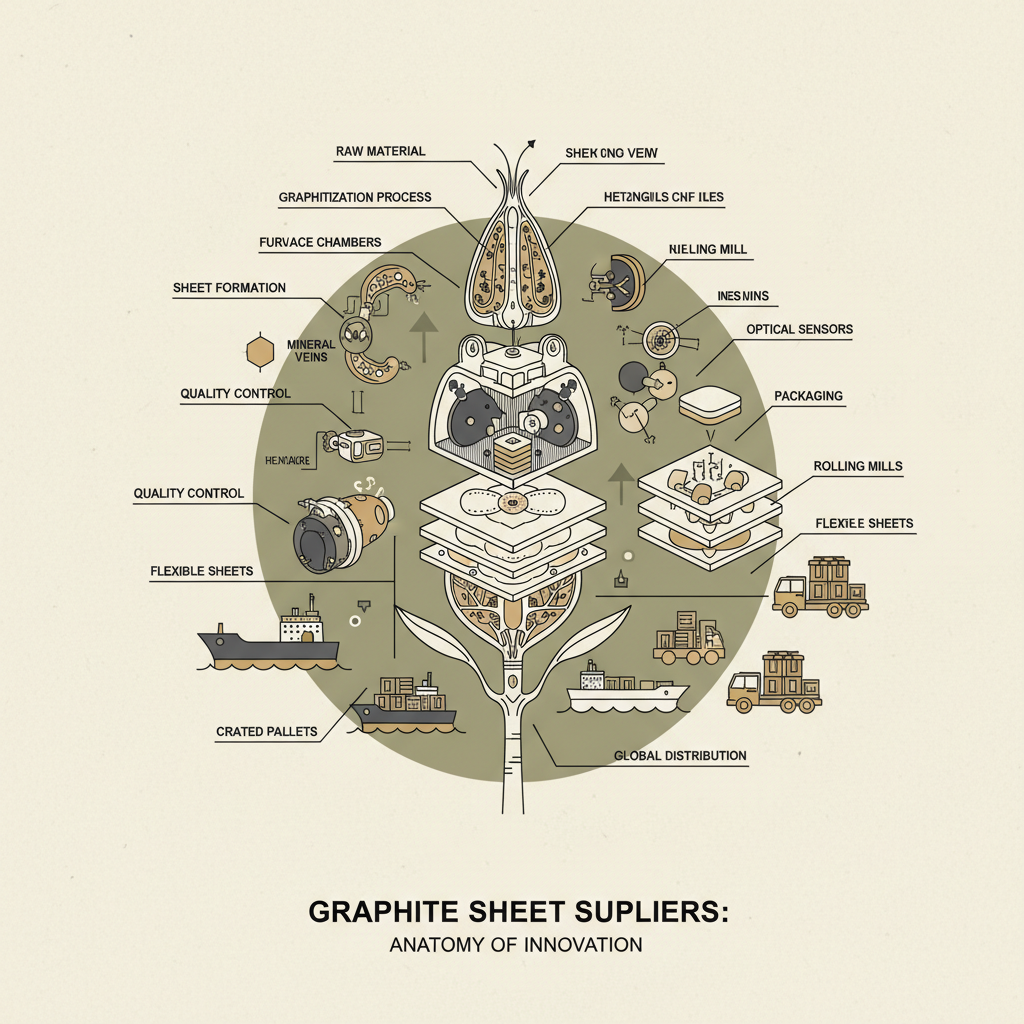
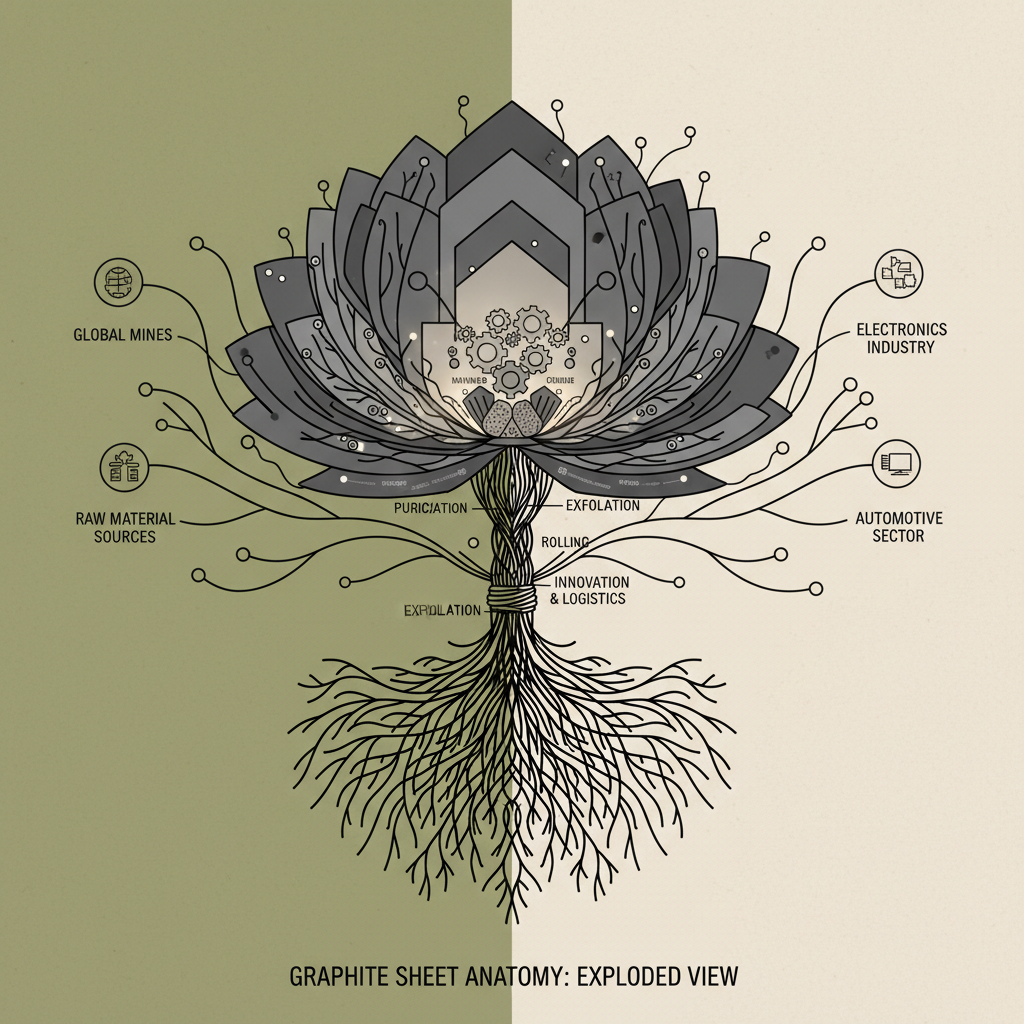
Look, I've been running around construction sites for fifteen years, getting my hands dirty with materials all day. Honestly, the biggest trend I’m seeing right now is everyone scrambling for higher performance graphite sheet suppliers. Not just for the specs, but for reliability. Folks are tired of stuff failing halfway through a project, costing them time and money. It's about minimizing headaches, plain and simple.
And it’s not just about the headline numbers. You think you're being clever going with the cheapest option? You’ll regret it. I've seen it time and time again.
It’s funny, everyone’s obsessed with maximizing thermal conductivity, which is important, sure. But they forget about the basics – dimensional stability, ease of handling… you know, things that actually matter when you’re wrestling with it on a rooftop in July.
The Current Landscape of graphite sheet suppliers
To be honest, the market for graphite sheet suppliers is getting crowded. You’ve got the big names from Japan, Germany, and now a ton of new suppliers popping up in China. A lot of them are offering similar specs on paper, but the real difference is in the consistency. Have you noticed how some sheets feel…different batch to batch? Like, the texture isn't quite right, or they don't compress the same way? That’s a red flag.
It really comes down to quality control and the raw materials they're using. I was at a factory in Shenzhen last time, and they were trying to pass off expanded graphite as the real deal. It looked okay at first glance, but it lacked the density and the layered structure of a proper graphite sheet. You could smell the difference, too – a sort of dusty, almost plastic odor.
Design Pitfalls and Common Mistakes with graphite sheet suppliers
Strangely enough, a lot of engineers underestimate the importance of compression. They’ll design a system assuming a certain level of compliance, but then they don’t account for the pressure needed to get the sheet to conform properly. That can lead to air gaps, uneven heat transfer, and ultimately, failure.
Another common mistake is choosing the wrong thickness. Too thin, and it won't provide enough thermal isolation. Too thick, and it becomes difficult to work with and can add unnecessary weight. And don’t even get me started on edge sealing. If you don’t seal the edges properly, heat will escape, and you’ve essentially wasted your money.
I also see a lot of designs that rely on adhesives that aren’t compatible with graphite. The adhesive degrades over time, the sheet comes loose, and…well, you can imagine the rest.
Material Characteristics of graphite sheet suppliers
Okay, let’s talk about the stuff itself. Graphite sheet suppliers aren’t all created equal. The quality depends on the type of graphite flakes used, the expansion process, and the binder system. The binder’s crucial - it needs to be thermally stable and compatible with the application. Some binders get brittle with temperature changes, and that’s a disaster.
You want a sheet that’s flexible, but also has a good tensile strength. It needs to be able to withstand handling and installation without tearing or crumbling. A good sheet feels…substantial. It’s not flimsy, and it doesn’t leave a lot of graphite dust on your hands. And it shouldn’t smell strongly of chemicals; that usually means they’ve used a poor-quality binder. You almost can't explain the feel with words, it just needs to be handled for a long time on the site.
Anyway, I think the key is understanding the trade-offs. Higher graphite content usually means better thermal conductivity, but it can also make the sheet more brittle. A good supplier will be able to help you find the right balance for your application.
Real-World Testing and Validation of graphite sheet suppliers
Forget the lab tests, okay? Those are good for initial screening, but they don’t tell the whole story. Real-world testing means putting the sheets through the paces in the actual application. I’ve seen sheets that performed beautifully in a controlled environment completely fall apart when subjected to vibration, temperature cycling, and humidity.
We do a lot of thermal imaging to check for hot spots and uneven heat distribution. And we’ll often run long-term reliability tests, subjecting the sheets to hundreds or even thousands of cycles to see how they hold up. Later… forget it, I won't mention the time we had to pull a whole batch off a project because they started delaminating after a week. It wasn’t pretty.
Graphite Sheet Supplier Performance Comparison
How Users Actually Employ graphite sheet suppliers
This is where things get interesting. You design something for a specific purpose, but users always find a way to do things differently. I’ve seen folks using graphite sheets as makeshift gaskets, as thermal spreaders for LEDs, even as shielding for sensitive electronics. They're resourceful, that's for sure.
They’ll cut it, punch holes in it, bend it into weird shapes… they’ll do whatever it takes to make it work. And sometimes, those unconventional applications are actually better than what we originally intended.
Advantages, Disadvantages, and the Value Proposition of graphite sheet suppliers
Look, the big advantage is, obviously, thermal conductivity. It’s unmatched. And it’s lightweight, flexible, and relatively inexpensive. But it's not perfect. It’s brittle, it can be messy, and it doesn’t always play nice with other materials.
The value proposition? It's about solving a specific problem – managing heat. If you need to dissipate heat quickly and efficiently, graphite sheet suppliers are hard to beat. But you need to understand its limitations and design accordingly.
Customization Options for graphite sheet suppliers
Customization is key. You can get sheets with different thicknesses, densities, and binder systems. You can even get them pre-cut to size or with adhesive backing. I had a customer last month, a small boss in Shenzhen who makes smart home devices. He insisted on changing the interface to on all his units, but it generated a lot of heat.
He wanted a graphite sheet with a specific thermal conductivity and a custom shape to fit inside his enclosure. It was a pain to get the dimensions right, and the lead time was longer, but he was willing to pay for it because it solved his problem. He really believed in the design, and it was worth the extra time and effort for him.
You can also get graphite sheets with different surface treatments to improve adhesion or reduce outgassing. It all depends on the application and your specific requirements.
Summary of Graphite Sheet Supplier Characteristics
| Material Composition |
Thermal Conductivity (W/mK) |
Flexibility (1-10) |
Cost (USD/sq. meter) |
| Natural Graphite |
100-150 |
6 |
5-10 |
| Expanded Graphite |
50-100 |
8 |
3-7 |
| High-Purity Graphite |
150-200 |
5 |
10-20 |
| Graphite with Polymer Binder |
70-120 |
7 |
4-8 |
| Flexible Graphite Foil |
130-180 |
9 |
8-15 |
| Composite Graphite Material |
Variable |
Variable |
12-25 |
FAQS
Honestly? Focusing solely on thermal conductivity. They forget about things like dimensional stability, compression, and the overall application. A high conductivity number doesn't mean much if the sheet falls apart when you try to install it. You've gotta think about the whole picture, the whole system. You can't just look at the spec sheet, you need to actually use the material.
Crucial. Absolutely crucial. The binder holds everything together, and it needs to be thermally stable, chemically compatible with the application, and durable. A cheap binder will degrade over time, leading to delamination and reduced performance. We’ve seen it happen. Look for suppliers who are transparent about the binder they’re using.
Yes, but it’s not their primary strength. Graphite is conductive, but it's not as efficient as copper or aluminum. It’s sometimes used for EMI shielding or as a contact material in low-voltage applications. However, for serious electrical conductivity, there are better options available. Don't try to force it to do something it’s not designed for.
Sharp blades are your friend. A utility knife with a fresh blade works well for thin sheets. For thicker sheets, a jigsaw with a fine-tooth blade is better. And wear a mask! You don’t want to breathe in the graphite dust. Also, try to cut in a well-ventilated area. Trust me.
Outgassing can be a problem, especially in sealed environments. Some graphite sheets release volatile organic compounds (VOCs) during the initial heat-up cycle. You can minimize this by baking the sheets at a low temperature before installation or by choosing sheets with a low-VOC binder. Ventilation is key.
That depends on the application and the environment. But a good quality sheet, properly installed, can last for years, even decades. We’ve seen sheets still performing well after 10+ years in relatively benign environments. Harsh environments, like those with high humidity or extreme temperatures, will shorten the lifespan, of course.
Conclusion
Ultimately, graphite sheet suppliers are a powerful tool for thermal management, but they’re not a magic bullet. You need to understand their strengths and weaknesses, choose the right material for the application, and install it correctly. It's not about finding the cheapest option; it's about finding the best value for your specific needs.
And remember, the real test isn't in the lab or on a datasheet. It's out on the job site, where the rubber meets the road. Ultimately, whether this thing works or not, the worker will know the moment he tightens the screw.