Understanding the variables that influence the pyrolytic graphite sheet price is essential for engineers and procurement specialists in the high-tech manufacturing sector. As a material characterized by extreme anisotropy and superior thermal conductivity, pyrolytic graphite is not a commodity but a precision-engineered component whose cost reflects its complex chemical vapor deposition (CVD) synthesis process.
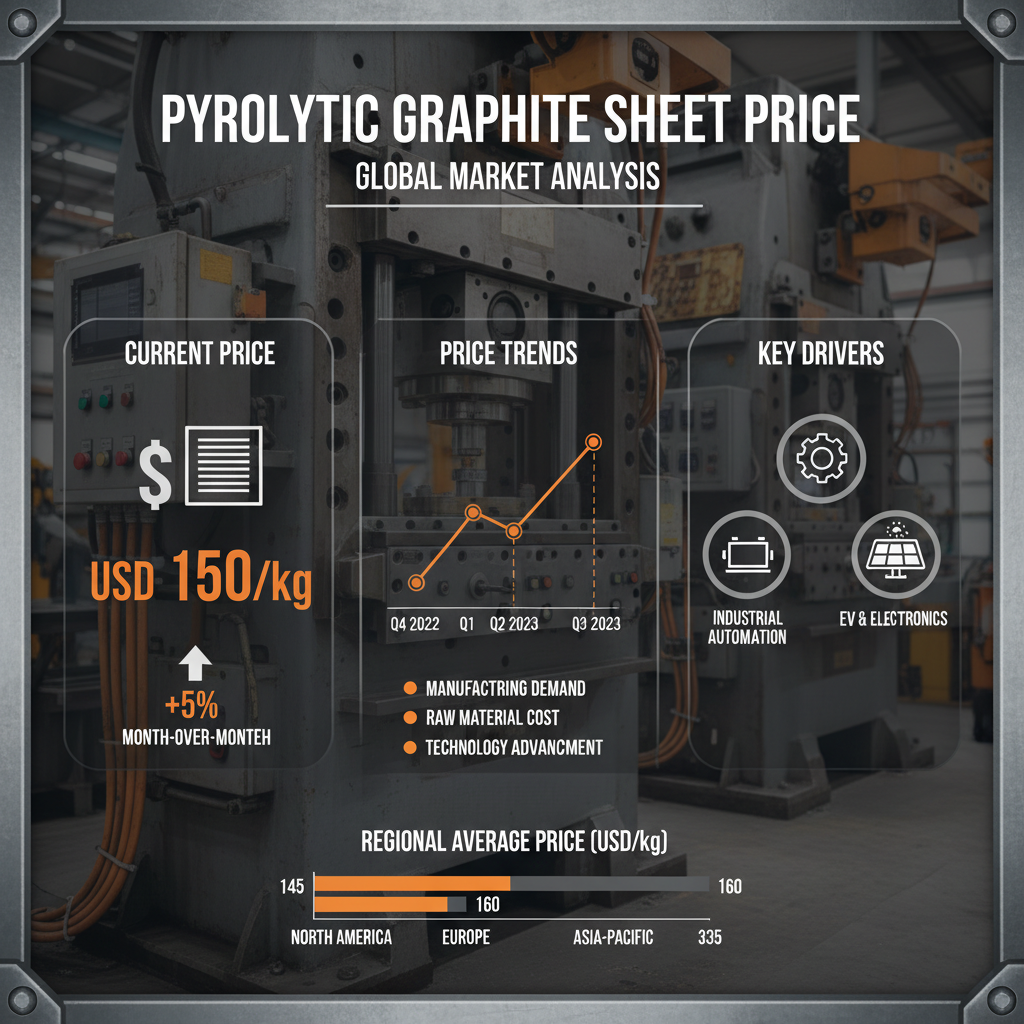
Globally, the demand for advanced thermal management solutions has pushed the pyrolytic graphite sheet price into a dynamic range, fluctuating based on raw material purity and the energy intensity of production. Whether used in semiconductor fabrication or aerospace heat shields, the price represents a balance between extreme performance specifications and the scalable manufacturing capabilities of carbonaceous material producers.
By analyzing the cost structures of these specialized sheets, companies can optimize their material selection across the carbon product spectrum—including Carbon Coke and Graphite Blocks—to ensure that their thermal solutions are both economically viable and technically superior. Understanding these pricing drivers allows for better budgeting in long-term industrial projects and innovation in electronics cooling.
Global Market Dynamics of Pyrolytic Graphite Sheet Price
The global market for pyrolytic graphite is heavily influenced by the intersection of energy costs and the demand for ultra-pure carbon sources. Unlike standard Graphite Electrodes, the production of pyrolytic sheets requires precise temperature control and high-purity hydrocarbon gases, making the pyrolytic graphite sheet price highly sensitive to fluctuations in industrial gas markets and electricity tariffs.
As international standards like ISO for carbon materials evolve, the pressure for higher consistency in crystal orientation has increased. This drive toward "zero-defect" sheets means that the premium paid for high-grade material is often a reflection of the rigorous quality control and testing protocols required to ensure optimal thermal conductivity.
Defining the Value Components of Pyrolytic Graphite
At its core, the pyrolytic graphite sheet price is not merely a cost per square millimeter, but a reflection of the material's unique molecular architecture. Pyrolytic graphite is produced by the thermal decomposition of a hydrocarbon gas, resulting in a highly ordered, layered structure that allows heat to travel horizontally with extraordinary efficiency while remaining an insulator vertically.
This structural duality is what separates it from cheaper alternatives like Graphite Powder or standard graphite blocks. The value lies in the "anisotropy ratio"—the degree to which the material behaves differently across its axes. The higher this ratio, the more specialized the production process, and consequently, the higher the market price.
From a humanitarian and industrial perspective, this material enables the creation of more efficient medical imaging devices and safer aerospace components. Thus, the pricing is tied to the critical nature of the applications; when a material's failure could lead to system catastrophe, the investment in high-tier pyrolytic graphite becomes a necessity rather than a luxury.
Core Technical Factors Influencing Material Cost
One of the primary drivers of the pyrolytic graphite sheet price is the purity of the precursor gas. To achieve the necessary crystal alignment, manufacturers must use high-purity methane or other hydrocarbons, which are subject to global commodity pricing. Any impurity in the gas phase can introduce defects into the graphite lattice, reducing thermal performance.
Furthermore, the deposition rate plays a critical role. Slow growth rates result in higher crystallinity and better heat dissipation, but they significantly increase the production time and energy consumption per unit. This "time-cost" is a major component of the pyrolytic graphite sheet price, as furnace uptime is one of the most expensive overheads in carbon manufacturing.
Finally, the post-production machining and polishing processes add a layer of cost. Because pyrolytic graphite is fragile in the Z-axis (layer peeling), achieving a mirror-finish surface without damaging the internal structure requires specialized diamond tooling and precision grinding, further elevating the final price point for the end-user.
Cost-Efficiency Analysis in Industrial Applications
When integrating these materials into a project, the initial pyrolytic graphite sheet price must be weighed against the total cost of ownership. In high-power electronics, for example, using a slightly more expensive pyrolytic sheet can reduce the need for bulky active cooling systems (like fans or liquid pumps), thereby reducing the overall system weight and energy consumption.
The efficiency gain is often non-linear; a small increase in material grade can lead to a significant leap in device lifespan by preventing thermal throttling. This makes the high-performance variant of pyrolytic graphite a cost-effective choice for mission-critical hardware where downtime is more expensive than the material itself.
Comparative Value Analysis of Pyrolytic Graphite Sheet Price Factors
Global Use Cases and Regional Pricing Trends
Across the globe, the application of pyrolytic graphite varies, which in turn affects the pyrolytic graphite sheet price in different regions. In East Asian tech hubs, the demand is driven by smartphone and laptop miniaturization, where thin, flexible graphite heat spreaders are used in massive volumes, leading to economies of scale that lower the price for standard thicknesses.
Conversely, in North American and European aerospace sectors, the focus is on custom, thick-gauge sheets for vacuum environments or high-temperature shielding. These "low-volume, high-spec" orders often carry a significant premium, as they require specialized furnace runs and customized quality certification, decoupling them from the mass-market pricing trends.
Long-Term Value and Sustainability Gains
Investing in high-quality materials, despite a higher initial pyrolytic graphite sheet price, contributes directly to industrial sustainability. Because pyrolytic graphite is chemically inert and highly resistant to corrosion, components last significantly longer than metal-based heat sinks, reducing the frequency of replacement and the associated waste stream.
Moreover, the superior thermal conductivity allows electronic devices to operate at lower temperatures, which reduces energy consumption for cooling and extends the life of sensitive semiconductors. This creates a virtuous cycle of efficiency where the material pays for itself through reduced operational expenses.
Beyond the logic of cost, there is the element of reliability. In critical infrastructure—such as satellite communications or medical ventilators—the trust placed in a material's performance is priceless. Choosing a verified, high-grade pyrolytic sheet ensures that the system operates with dignity and safety, avoiding the risks associated with cheaper, uncertified alternatives.
Future Innovations and Pricing Forecasts
The future of the pyrolytic graphite sheet price will likely be shaped by the transition toward "Green Carbon" manufacturing. As producers shift toward renewable energy to power their CVD furnaces, the energy component of the cost may stabilize, though the initial transition to green infrastructure might cause a temporary price uptick.
Digital transformation in manufacturing, specifically the use of AI-driven process control, is expected to reduce waste and improve yield rates. By optimizing the gas flow and temperature gradients in real-time, manufacturers can produce sheets with fewer defects, potentially lowering the price of high-grade materials for the broader market.
As we move toward a world of 6G communications and quantum computing, the need for extreme thermal management will only grow. We anticipate a diversification of the product line, where "hybrid" graphite sheets—combining pyrolytic properties with other carbon allotropes—will create new pricing tiers based on multifunctional performance.
Technical and Economic Analysis of Pyrolytic Graphite Grade Variations
|
Material Grade
|
Thermal Conductivity (W/mK)
|
Relative Price Index
|
Primary Application
|
| Standard Grade |
800 - 1200 |
1.0x (Baseline) |
Consumer Electronics |
| High-Purity Grade |
1300 - 1700 |
1.8x |
Medical Imaging |
| Ultra-Pure Grade |
1800+ |
3.2x |
Semiconductor Fab |
| Flexible Composite |
600 - 900 |
1.2x |
Mobile Device Heat Spreaders |
| Aero-Grade Shield |
1500 - 1900 |
4.5x |
Satellite Thermal Control |
| Industrial Grade |
400 - 700 |
0.7x |
General Heat Dissipation |
FAQS
The most critical factors include the purity of the hydrocarbon precursor gases, the duration of the deposition process (which affects crystallinity), and the energy costs associated with maintaining extreme furnace temperatures. Additionally, the required thickness and surface finish (polishing) can add significant premiums to the base price.
Yes, significantly. While graphite blocks are produced through molding and baking, pyrolytic graphite is grown atom-by-atom via Chemical Vapor Deposition (CVD). This process is much slower and more energy-intensive, resulting in a higher pyrolytic graphite sheet price, but offering thermal conductivity and purity levels that standard blocks cannot match.
Cost does not scale linearly with thickness. Because deposition is a slow process, doubling the thickness of a sheet can more than double the production time and energy cost. Consequently, very thick pyrolytic graphite sheets often have a higher price per unit of volume than thinner sheets.
Depending on your needs, synthetic graphite sheets or graphite-filled polymers may be cheaper. However, these lack the extreme anisotropy of pyrolytic graphite. If your application requires high horizontal heat spread and low vertical conduction, the higher pyrolytic graphite sheet price is usually a necessary investment for system functionality.
Yes, for standard specifications. Large-volume orders allow manufacturers to optimize furnace loads and reduce the setup cost per unit. However, for custom-engineered specifications (custom purity or thickness), the price reduction is less pronounced because the production run remains a specialized process.
Pyrolytic graphite is incredibly durable, resisting most acids and high temperatures. Its long operational life significantly enhances its long-term value; although the initial price is high, the lack of degradation means replacement costs are nearly zero over many years, making it a sustainable economic choice.
Conclusion
Navigating the pyrolytic graphite sheet price requires a deep understanding of the trade-offs between material purity, crystal orientation, and production energy. From the high-volume demands of consumer electronics to the precision requirements of aerospace engineering, the cost of this material is a direct reflection of its unparalleled ability to manage heat in extreme environments. By focusing on the total cost of ownership rather than the initial purchase price, industries can leverage pyrolytic graphite to build more efficient, reliable, and sustainable technologies.
Looking forward, the convergence of green energy and AI-driven manufacturing is poised to make these high-performance carbon materials more accessible. For companies seeking to optimize their thermal management strategies, we recommend auditing current material efficiencies and exploring high-grade pyrolytic solutions to future-proof their hardware against the increasing heat loads of next-generation computing. Visit our website for more professional insights and quotes: www.dahcarbon.com